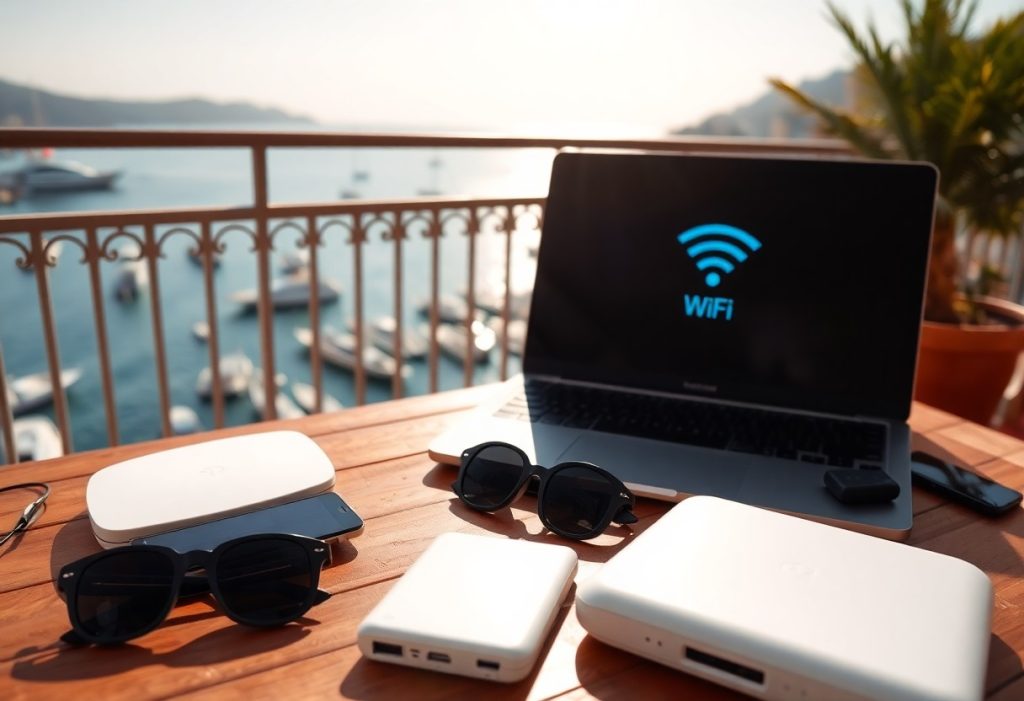
Many times you rely on sunlit Côte d’Azur sites where overheating and glare threaten connections, so you choose weatherproof cabinets, battery backup and careful antenna placement for secure wireless links – see The Essential Benefits of Outdoor Telecom Cabinets for 5G …
Key Takeaways:
- RF planning and hardware choices secure reliable links: conduct site surveys and spectrum analysis, keep line-of-sight, use high-gain and diversity antennas, select 5GHz/6GHz or coordinated/licensed bands, and set antenna polarization and legal transmit power.
- Link redundancy and adaptive codecs maintain continuous media: deploy dual-path transmitters with automatic failover, implement forward error correction and adaptive bitrate, and prioritize traffic with QoS.
- Sunlight-specific measures protect image and gear: use high-brightness, hooded displays with anti-glare coatings, fit cameras with ND filters and dynamic exposure control, and use heat-rated batteries, ventilation, and thermal monitoring for equipment racks.
Dealing with that Mediterranean Glow
Sunlight floods your monitors and can push wireless transmitters toward higher temps, so you angle displays, use matte shields, and park transmitters in shade. If you rely on wireless video or comms, watch for signal drops from overheating and keep spare cooled batteries.
Bright reflections force you to jack up screen brightness, which accelerates battery drain and risks a misread exposure on set. Aim screens away from the horizon, issue polarized goggles to key crew, and test every wireless link in full sun before takes.
Why glare is your biggest enemy on set
Glare can hide framing and push you into costly retakes, so you check monitors from multiple angles and use hooded displays or sunshades. With wireless follow-focus or monitoring, blinding reflections can cost time and money.
Shadows shift quickly under intense Mediterranean glow, forcing constant lighting tweaks and sometimes antenna repositioning to hold a clean wireless connection. Practice quick mirror checks and angle adjustments between setups.
Managing the heat when things get intense
Heat cooks electronics and shortens component life, so you keep sensitive gear off hot surfaces and rotate powered units into coolers or shaded cases. When you use wireless transmitters, watch for thermal throttling that causes frame drops.
Battery packs are the weak link under direct sun; you stash spares in insulated pouches and schedule swaps instead of pushing cells to failure. Label temps and use sensors so you spot overheat risks early.
Shade works as a low-tech lifesaver: rig canopies or black flags over monitors and antenna zones to protect viewing and signal integrity, reducing glare and lowering device temperatures for a more reliable wireless workflow.
Choosing the Right High-Brightness Monitors
Choose displays rated at 1000-2000 nits so you can read timelines and menus under direct Côte D’Azur sunlight; you should prefer models that hold color at high brightness. See usage impacts in How Seasonality Affects Mobile Networks: Q&A with Jeffery ….
Avoid panels that throttle peak output to save battery when you’re outdoors, since that causes loss of detail and misjudged exposure; choose IPS or VA panels with good thermal design and consistent luminance.
Understanding nits and visibility
Brightness in nits determines readability, so you should target 1000+ nits for bright midday sun and consider 1500+ nits for uncompromised visibility in direct glare; lower specs may only work in shade.
Anti-reflective coatings that actually work
Coatings reduce mirror-like reflections, and you’ll want multi-layer AR plus a matte hardcoat that cuts specular highlights without softening image detail; beware coatings that scratch easily, since glare can destroy framing and color accuracy.
If you pair AR with a hydrophobic topcoat, you’ll repel oils and salt spray, keep touch responsiveness, and extend anti-glare performance in coastal sunlight.
Keeping Your Wireless Signal Strong
Sunlight warms devices, so you should shade receivers and keep vents clear to prevent overheating and avoid unexpected signal loss. A quick check of batteries and cable connections keeps your link steady under glare.
Positioning antennas for clear line-of-sight and slight elevation reduces ground reflections and helps you maintain steady throughput when crowds or sun glare shift around you.
Beating interference in open outdoor spaces
Outdoors you contend with reflections from water, crowd devices, and broadcast sources; scan for active channels and set your gear to the quietest frequencies to reduce interference. Use directional antennas so you focus power where you need it.
The magic of multi-band frequency hopping
Channels let you spread traffic across 2.4 GHz, 5 GHz, and higher bands so you avoid congested slices and gain redundancy; multi-band frequency hopping keeps your link alive when one band degrades.
Hopping between bands dynamically helps you dodge persistent noise and gives you automatic backups; you should enable band steering and adaptive hopping so your system shifts before you notice any drop.
Cooling Down Your Gear
Sun glare and heat on the Côte d’Azur can push your wireless kit to its limits, so you need to manage temperature to keep sessions running. Aim to shelter hubs and batteries from direct rays, use shading and cooling cases, and monitor temps to avoid thermal shutdowns that risk data loss.
Active vs. passive cooling systems for hardware
Active systems use fans or Peltier units to move heat away quickly, so you can keep transmitters and recorders at safer operating temps; active cooling prevents sudden shutdowns but consumes extra power. Passive solutions use heatsinks and ventilation, which are silent and low-power yet less effective under prolonged sun exposure.
Strategic placement to avoid overheating
Positioning your gear in shaded spots, behind reflective screens, or inside ventilated cases reduces direct solar load while keeping antennas with clear sightlines. Keep batteries and transmitters off hot surfaces and place sensitive modules where airflow is better to lower the risk of overheating.
Keep monitoring temps with onboard sensors so you can move units into cooler microclimates like shaded benches or insulated coolers; a simple fan can remove trapped heat, and marking hot zones helps your crew avoid placing gear where concentrated sun causes performance drops.
The Small Details That Save the Day
Small tweaks like low-profile mounts, weatherproof connectors and sandbags keep your kit steady when a Riviera gust tries to undo your setup. You can cut glare risks and prevent accidental disconnects with tidy cable management and secure anchors.
Every plan should include spare batteries and a compact power bank so you don’t lose signal mid-shoot under bright sun. You should keep a labeled cable roll and a tiny tool kit handy because overheating batteries and loose connectors are common outdoor hazards.
Sun hoods and protective shields
Shades and shields reduce screen glare and create a cooler zone for monitors and routers, lowering the chance of overheating. You’ll want hoods that clip on without scratching lenses and stow away quickly when clouds roll in.
Ergonomic setups for outdoor mobility
Adjustable mounts let you keep screens readable while moving between sun and shade, so you stay productive on uneven terraces. You should test handle heights to avoid shoulder strain and keep shots steady.
Lightweight rigs with quick-release plates give you mobility without sacrificing stability, making it easier to chase the best golden-hour angle. You can swap to a compact tripod to cut setup time and reduce fatigue.
Consider padded straps, belt clips and a compact cart to distribute weight and prevent long-term aches; those small comforts help you focus on the shot. You should prioritize ergonomic support to protect your back during long outdoor sessions.
Powering Your Workflow All Day
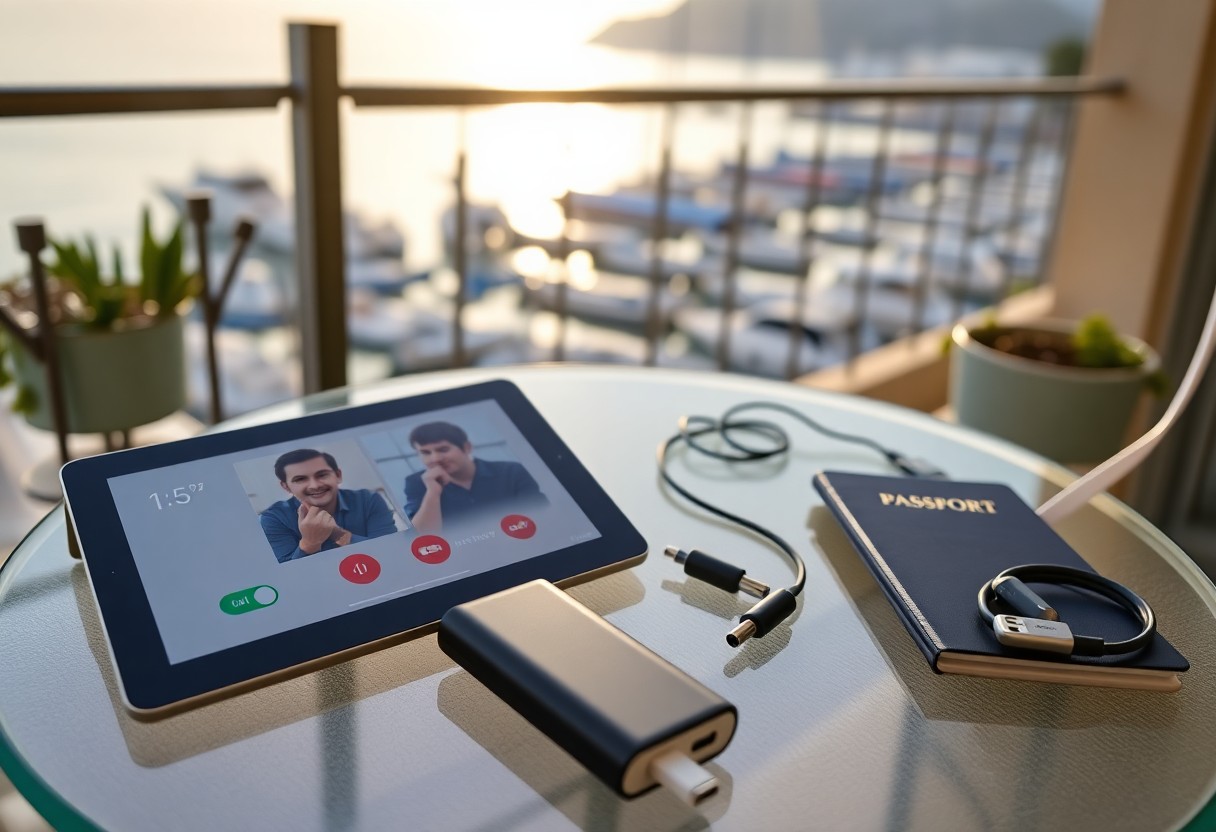
Your gear needs reliable, cool power under Côte D’Azur sun; choose supplies that deliver all-day runtime and stand up to heat. Keep chargers and spare cells in shaded, ventilated bags to avoid overheating and sudden shutdowns during long takes.
High-capacity batteries for long shoots
High-capacity packs let you shoot longer with fewer swaps; pick cells rated for many cycles and with USB-C Power Delivery so you can top up quickly between scenes. Store spares in a cool case and test them in sun to confirm consistent voltage on every take.
Reliable power management on the go
Smart power managers let you prioritize camera and comms, provide surge protection, and show real-time charge so you avoid surprises in bright conditions. Use configurable outputs to keep mission-critical kit running when the heat spikes.
Use travel-grade surge protectors and solar-shielded power banks to avoid battery swelling or shutdown in high temperatures, and enable low-battery alerts so your importants never die mid-shoot.
Summing up
Summing up, you can keep a reliable wireless workflow on the Côte D’Azur by choosing heat-tolerant gear, high-gain antennas, and frequency plans that avoid congested bands. Shade, sun-reflective surfaces, and passive cooling reduce thermal throttling, while Wi-Fi 6/6E or 5G, MIMO radios, QoS, and redundant links preserve performance. Regular testing, firmware updates, and backup power keep your connections steady during bright, variable coastal conditions.
FAQ
Q: What specific challenges does strong Côte D’Azur sunlight create for a wireless workflow?
A: Bright Mediterranean sun generates extreme contrast, glare and reflections that impair camera sensors and displays. Heat from prolonged sun exposure accelerates thermal throttling and shortens electronic component life. Salt spray near the coast increases corrosion risk for connectors and antennas. High tourist density and boats create RF congestion that reduces available wireless capacity.
Q: Which hardware choices ensure reliable operation under direct sunlight on the Côte D’Azur?
A: Choose outdoor-rated access points, radios and enclosures with IP66/67 or better to resist moisture and salt. Select high-brightness, transflective or optically bonded displays with anti-reflective coatings for daytime visibility. Use cameras with wide dynamic range (WDR), adjustable ND filters and sun visors to manage high-contrast scenes. Specify thermal management features such as heat sinks, temperature sensors and ventilated or coated enclosures to avoid overheating.
Q: What wireless network strategies keep connections stable in sunny, crowded coastal environments?
A: Combine technologies: 5 GHz Wi‑Fi for high throughput where line of sight exists, 2.4 GHz for better penetration, and bonded cellular or point-to-point microwave for mobility and redundancy. Employ directional or high-gain antennas and proper mast height to preserve line-of-sight over promenades and marinas. Use modern MIMO radios and Wi‑Fi 6/6E equipment to increase spectral efficiency under heavy load. Implement channel planning, automatic channel switching and quality-of-service rules to prioritize control and video traffic.
Q: How should power and mounting be handled to keep systems running reliably in the sun?
A: Provide redundant power with hot-swappable batteries and optional solar assist for remote or long-duration events. Mount electronics in shaded, ventilated enclosures or behind sun shields and include passive cooling or heat spreaders. Use marine-grade cabling, corrosion-resistant connectors and surge protection given proximity to saltwater and lightning risk. Schedule regular maintenance checks for seals, gaskets and mounting hardware after stormy weather.
Q: What operational practices and software choices reduce outages and preserve quality in daytime outdoor shoots?
A: Encrypt links end-to-end and enforce multi-factor authentication for remote access to prevent interception and spoofing. Monitor link performance in real time and automate failover between Wi‑Fi, cellular and point-to-point paths to maintain uptime. Adopt efficient video codecs (HEVC, AV1 where supported), adaptive-bitrate streaming and forward error correction to handle variable bandwidth and latency. Conduct on-site testing at different times of day to tune camera exposure, antenna alignment and network QoS for actual sunlight, crowd and RF conditions.